


Evaluation gap
A rollout can look right for the wrong reason.
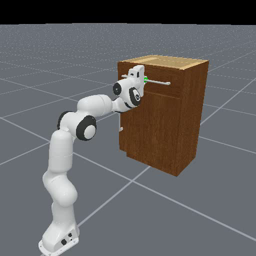
Most ACWM evaluations focus on visual quality, task success, or coarse responsiveness, leaving two gaps: action realization is treated as a monolithic capability rather than a multi-dimensional process spanning local, global, and source-specific control variations, while interaction response is rarely checked for grounding in realized motion, valid contact, and correct dynamics. Yet a faithful simulator must preserve the full chain from supplied action to agent motion to environment response; otherwise, a rollout can look plausible or succeed while still ignoring controls or hallucinating unsupported interactions.

Failure modes
Where the causal chain breaks.
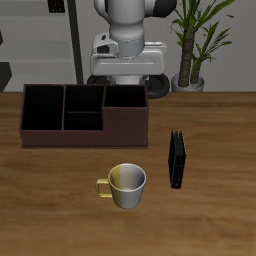
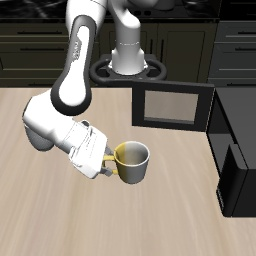
Action Calibration Failure
Action calibration is the alignment between the magnitude of an action change and its physical effect. Miscalibration shifts or obscures the failure threshold—the smallest perturbation beyond which task failure or rollout outcome change persists.
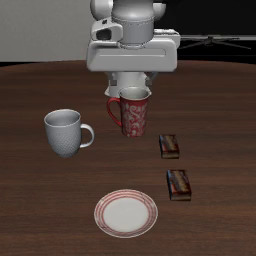
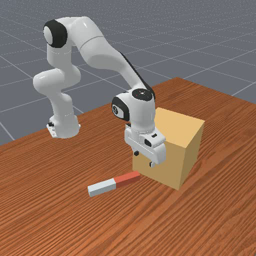
Global Trajectory Coverage Failure
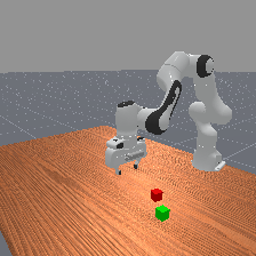
Global trajectory coverage is the ability to realize physically executable actions beyond task-associated trajectories. When coverage is limited, unfamiliar controls collapse toward task-typical motion instead of producing the supplied trajectory.
Source Behavior Preservation Failure
The model smooths away source-specific speed, corrections, and execution strategies, collapsing human, policy, and expert controls toward canonical behavior.
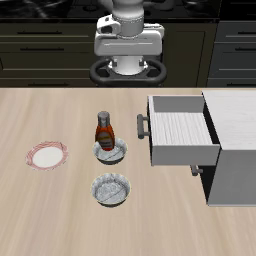
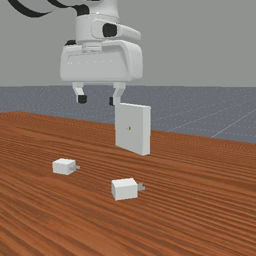
Interaction Grounding Failure
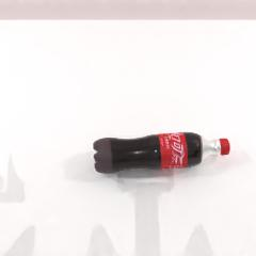
Interaction grounding determines whether an interaction should occur given the realized motion, gripper state, and scene geometry. Failure appears as contact hallucination: the object or agent behaves as if contact occurred despite no physically supported contact.
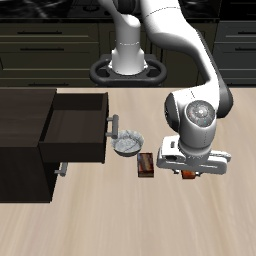
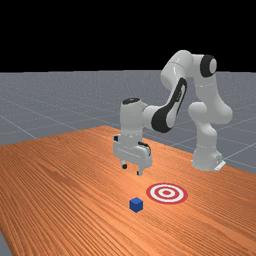
Interaction Dynamics Failure
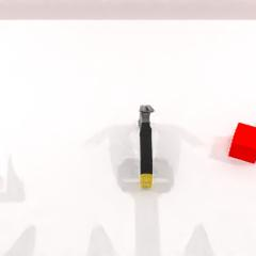
Interaction dynamics determines how an interaction unfolds after contact. Failure occurs when either the agent motion or environment response is incorrect, producing a different interaction than intended.

